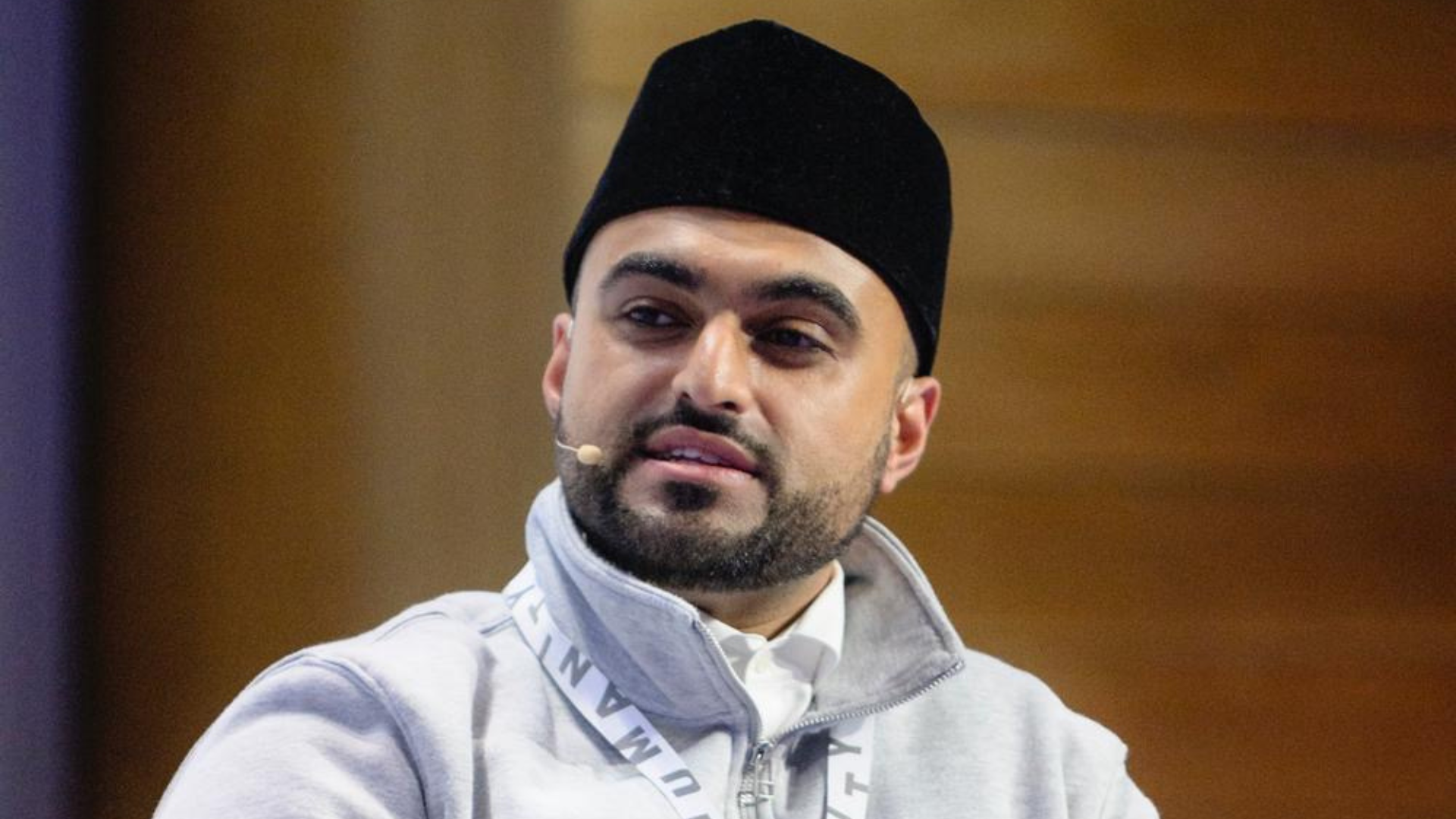
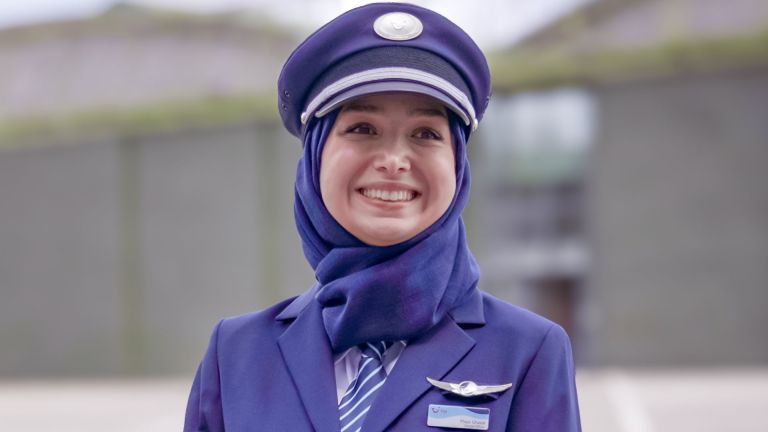
Sabah Ahmedi is one of the UK's youngest Imams. Credit: Sabah Ahmedi
Share
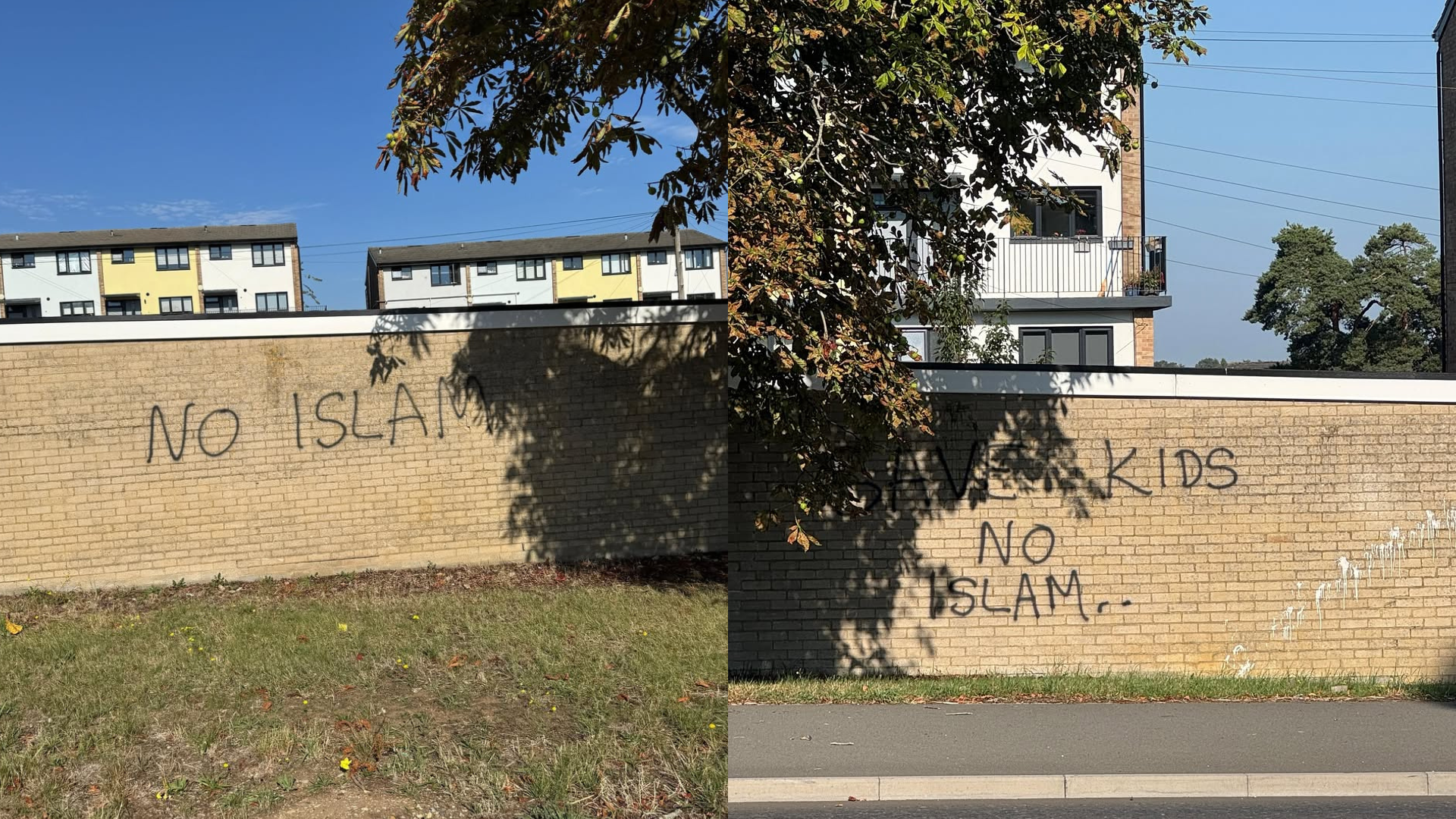
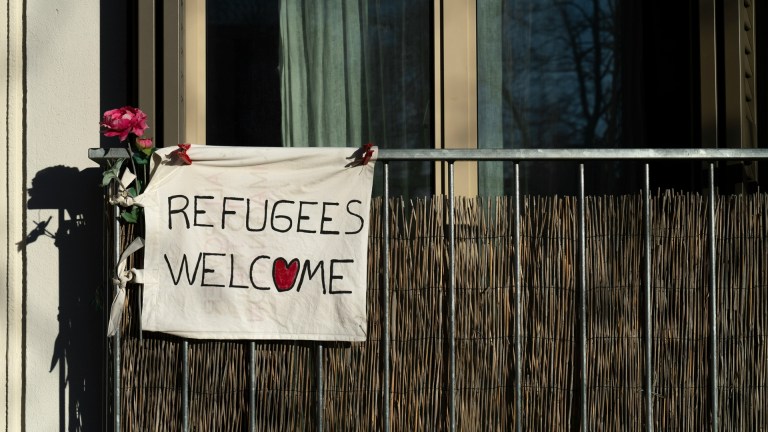
The words appeared in black spray paint on a low brick wall near where Sabah Ahmedi lives: No Islam. A second message appeared nearby, more insinuating than explicit: Save our kids. No Islam.
Ahmedi photographed the graffiti and posted it online in September. He thanked local residents and the council for reporting it, but warned that the damage went beyond vandalism. The slogans, he wrote, were part of “a wider trend of divisive graffiti appearing across the country”, fuelled by misinformation and fear.
It is against this backdrop that Big Issue meets Ahmedi, one of the UK’s youngest Muslim leaders, who has built a large following online as The Young Imam, using social media to demystify everyday Muslim life in Britain.
“The saddest thing is,” he tells Big Issue during a visit to Britain’s biggest mosque, “I’m numb to it now.”
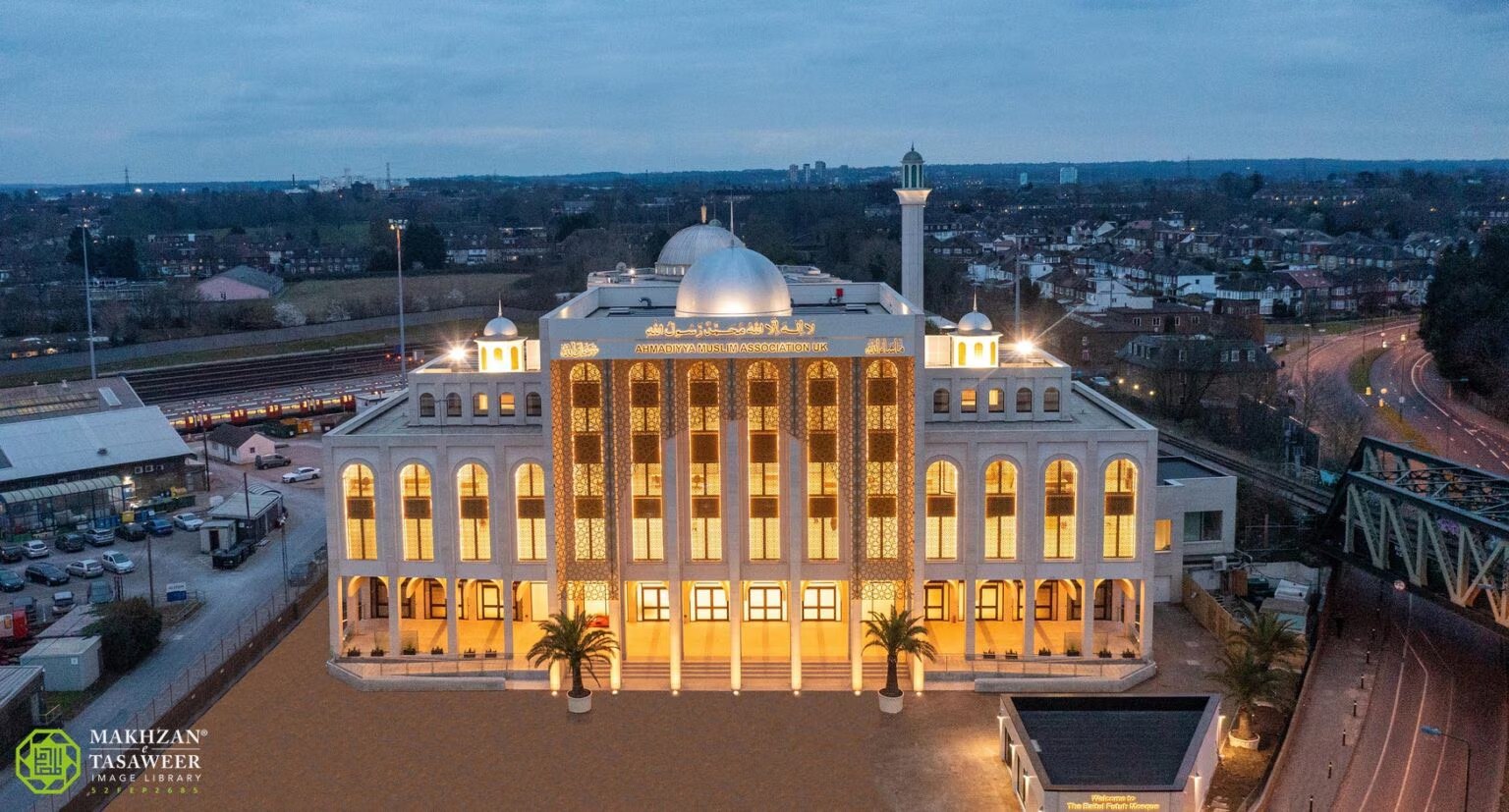
We meet in the grounds of the Baitul Futuh mosque in Morden, South London. It’s a grand building, and you can see its domes and minarets rise into view as you exit the nearby train stations. Out front, palm trees are wrapped up and tied against the winter cold.
For Ahmedi, the graffiti near his home is not an isolated incident. It is part of a pattern he has watched harden over time, from online abuse to street-level hostility. It’s a pattern he believes Britain has yet to truly confront as it heads into 2026.
Advertising helps fund Big Issue’s mission to end poverty
Advertising helps fund Big Issue’s mission to end poverty
Ahmedi grew up in Manchester and remembers being called a “terrorist” at school after 9/11. In the playground in year eight, he recalls bottles and stones being thrown at brown and Black boys; one child’s eye was injured, and he had to be taken home. At the time, he didn’t have a word for it.
“I didn’t even know Islamophobia was a term then,” he says. “You just went to school and got on with it.”
Years later, in his first job, he was told he could not work on the shop floor with a beard and was instructed to shave. He complied without complaint. “At the time, I didn’t think anything of it,” he says. “Now, if someone said that, you’d ask: what is actually going on?”
What has changed, he believes, is not only the intensity of anti-Muslim sentiment but the way it is expressed. Abuse today is rarely framed as hatred outright. Instead, it appears as concern, particularly for children.
Ahmedi scrolls through Instagram to show a video. It’s from earlier in 2025 and shows protesters chanting “save our kids” at some kind of rally. He pauses before turning.
“Save our kids from what?” he asks.
Advertising helps fund Big Issue’s mission to end poverty
The phrase, he says, appears repeatedly beneath posts about Muslims, immigration and asylum. It implies a threat without specifically naming one, allowing fear to circulate without accountability.
“It’s vague on purpose,” he explains. “Everyone understands what it’s meant to suggest, but no one ever explains it.”
Coded language and borrowed causes
The language is not new. In recent months, the Big Issue has reported on how slogans invoking the safety of women and children, “protect our women”, “save our girls”, have been used at anti-asylum protests across the UK. More than 100 women’s rights organisations have warned that serious conversations about violence against women and girls are being “hijacked by an anti-migrant agenda” that fuels division while obscuring the reality that most abuse is perpetrated by someone known to the victim.
For Ahmedi, the same rhetorical strategy has been applied to Muslims more broadly; not through direct accusation, but through insinuation.
“When people say ‘save our kids’, I want to know what they think Muslims are doing,” he says.
He points instead to the role Muslim organisations play in public life, from fundraising for children’s charities to work in schools and food banks, arguing that Muslims are already embedded in the same communities they are portrayed as threatening.
Advertising helps fund Big Issue’s mission to end poverty
The graffiti near his home (“Save our kids. No Islam”) made the implication explicit. But Ahmedi believes the damage is done long before slogans reach brick walls.
“This stuff circulates online first,” he says. “Then it moves into real life.”
The Baitul Futuh Mosque is the largest purpose-built mosque in Western Europe. Credit: Makhzan-e-Tasaweer Image Library
What are British values?
Debates about Islam and belonging in Britain are often framed around the language of “British values”. Recent polling suggests that framing is hardening into something more exclusionary.
A July YouGov survey, commissioned by the Ahmadiyya Muslim Community, found that 53% of Britons believe Islam is not compatible with British values. The same polling showed that 41% of respondents believe Muslim immigrants have a negative impact on the UK, while just 24% view their impact positively.
“It shows the reality on the ground,” Ahmedi says. “That’s what we’re dealing with.”
Asked what he understands British values to mean, Ahmedi resists cultural shorthand. For him, the term is less about tradition than principle.
Advertising helps fund Big Issue’s mission to end poverty
“If British values are about equality and justice for everyone to live peacefully and freely,” he says, “then I’m completely aligned with that.”
The polling suggests that scepticism towards Islam extends beyond abstract questions of values. A significant proportion of respondents also associated Islam with social harm, including perceptions that Muslim communities contribute negatively to public life; views that persist despite evidence that Muslim organisations play a substantial role in charity, community work and civic participation across the UK.
For Ahmedi, this gap between perception and reality is central to how Islamophobia operates. Muslims, he says, are often asked to demonstrate compatibility in ways others are not and required to justify their presence rather than being assumed to belong.
The role of the media
Much of Ahmedi’s frustration is directed not at individuals but at systems, particularly how Islam is discussed in the media.
“‘Muslim terrorist’ is a phrase people accept without questioning,” Ahmedi points out when referencing headlines that focus on religion. “You never hear ‘Christian terrorist’ used in the same way.”
For him, the issue is not only accuracy but consequence. Language shapes perception, and perception shapes policy. When violence is framed as inherently linked to Islam, entire communities become suspect by default.
Advertising helps fund Big Issue’s mission to end poverty
“A Muslim is someone who strives for peace,” he says. “Terrorism is the opposite. Putting those words together is an oxymoron, but we’ve normalised it.”
He is careful not to position journalists as enemies. Instead, he points to a gap in familiarity.
“I’ve met people in senior media roles who have never had a proper conversation with a Muslim,” he admits. “They report on Islam all the time, but they don’t know who to ask when they have questions.”
In response, Ahmedi has taken an unusual step. Over recent years, he says he has contacted more than 8,000 journalists across the UK, offering to meet for coffee or host them at the mosque.
“People are curious,” he says. “They just haven’t been given the opportunity to ask questions in a normal, human way.”
Opening doors… literally
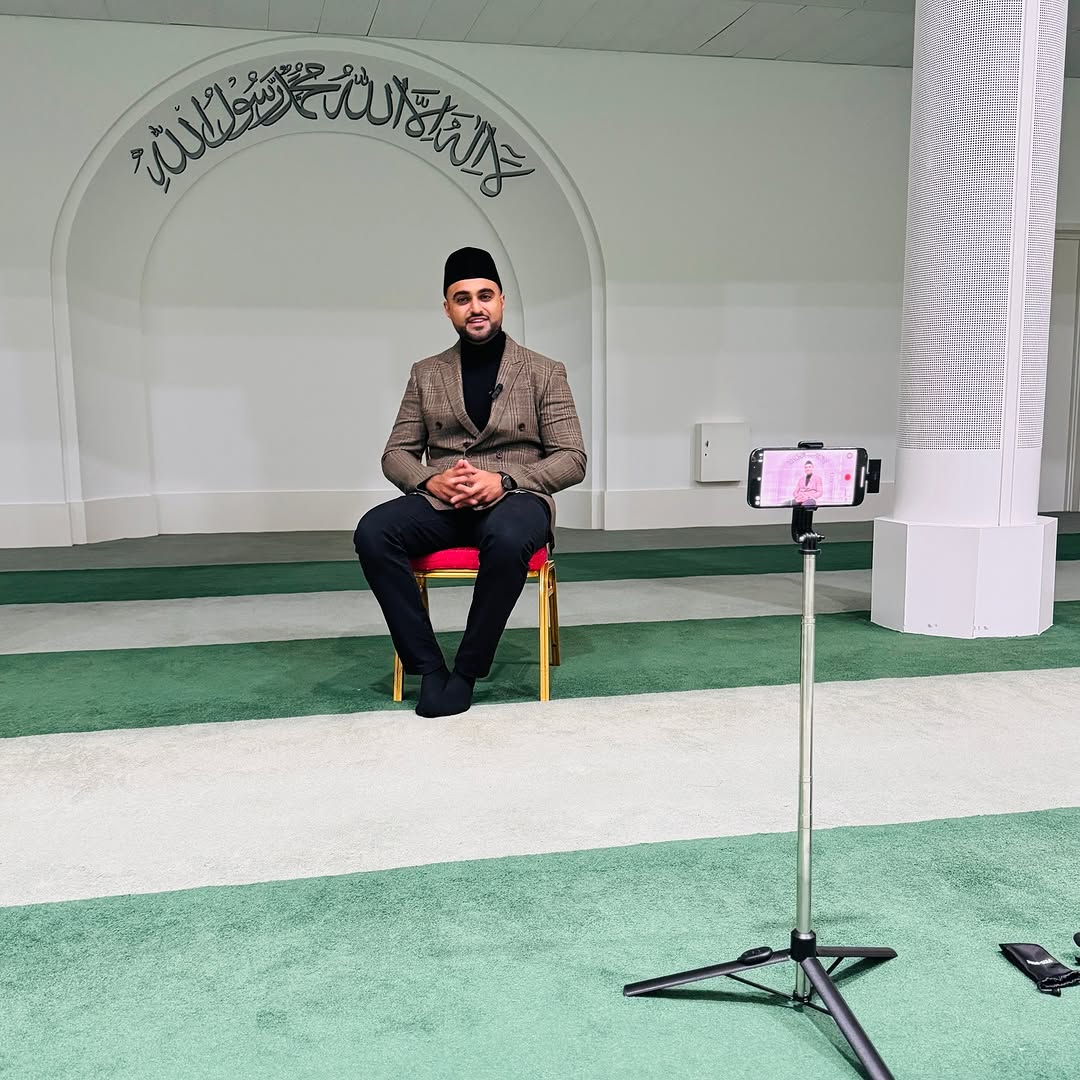
Ahmedi shows Big Issue around the mosque’s grounds. Inside are libraries, television and radio studios, a community centre, and a large prayer hall. The vast, light-filled space is designed to accommodate thousands of worshippers. The walls are plain, but the space still feels grand.
Advertising helps fund Big Issue’s mission to end poverty
“There are no pictures,” Ahmedi explains. “It’s meant to keep your focus on God.”
He points out the ablution area, where worshippers wash before prayer, not because they are “dirty”, he says, but to mark a mental shift. He notes the gallery where visitors can observe prayers and ask questions, many of them, he says, first-time visitors.
“People come in with fear,” he says. “They leave with understanding.”
Opening the mosque to outsiders, he believes, disrupts the distance in which Islamophobia thrives.
“The fear is of the unknown,” he says. “Once you’ve seen what actually happens here, it’s harder to maintain those ideas.”
Online hate, offline impact
Ahmedi’s visibility has made him a frequent target online. He scrolls through comments accusing Muslims of grooming, extremism and conspiracy. Some are too graphic to repeat.
Advertising helps fund Big Issue’s mission to end poverty
“I’m used to it now,” he says. “That doesn’t mean it doesn’t affect you.”
What worries him more is how easily online language migrates into physical space – onto walls, into neighbourhoods, into everyday interactions. The graffiti near his home is one example. Chanting at protests is another.
“This stuff doesn’t stay online,” he explains. “It seeps out.”
Asked whether he believes it is still possible to change minds in a climate that often feels hardened, Ahmedi does not frame the question in terms of persuasion or debate.
“I just want to understand where the fear comes from,” he says. “If you don’t ask me, you’ll ask someone else. Or you won’t ask at all.”
That is why, alongside his work at the mosque, Ahmedi continues to make himself publicly available, answering questions online, inviting people to visit, and offering conversation without preconditions.
Advertising helps fund Big Issue’s mission to end poverty
As Britain moves toward 2026, Ahmedi expects the questions directed at Muslims to persist, often framed as concern rather than hostility. His response, he says, will remain the same.
Buy from your local Big Issue vendor every week – or support online with a vendor support kit or a subscription – and help people work their way out of poverty with dignity.
Advertising helps fund Big Issue’s mission to end poverty