Cornwall is reinventing its mining past to take on China. But can lithium deliver a return to glory?
The UK needs lithium – and Cornwall is gearing up to provide it. Big Issue headed to Redruth to see whether the mining revival can deliver a local boost
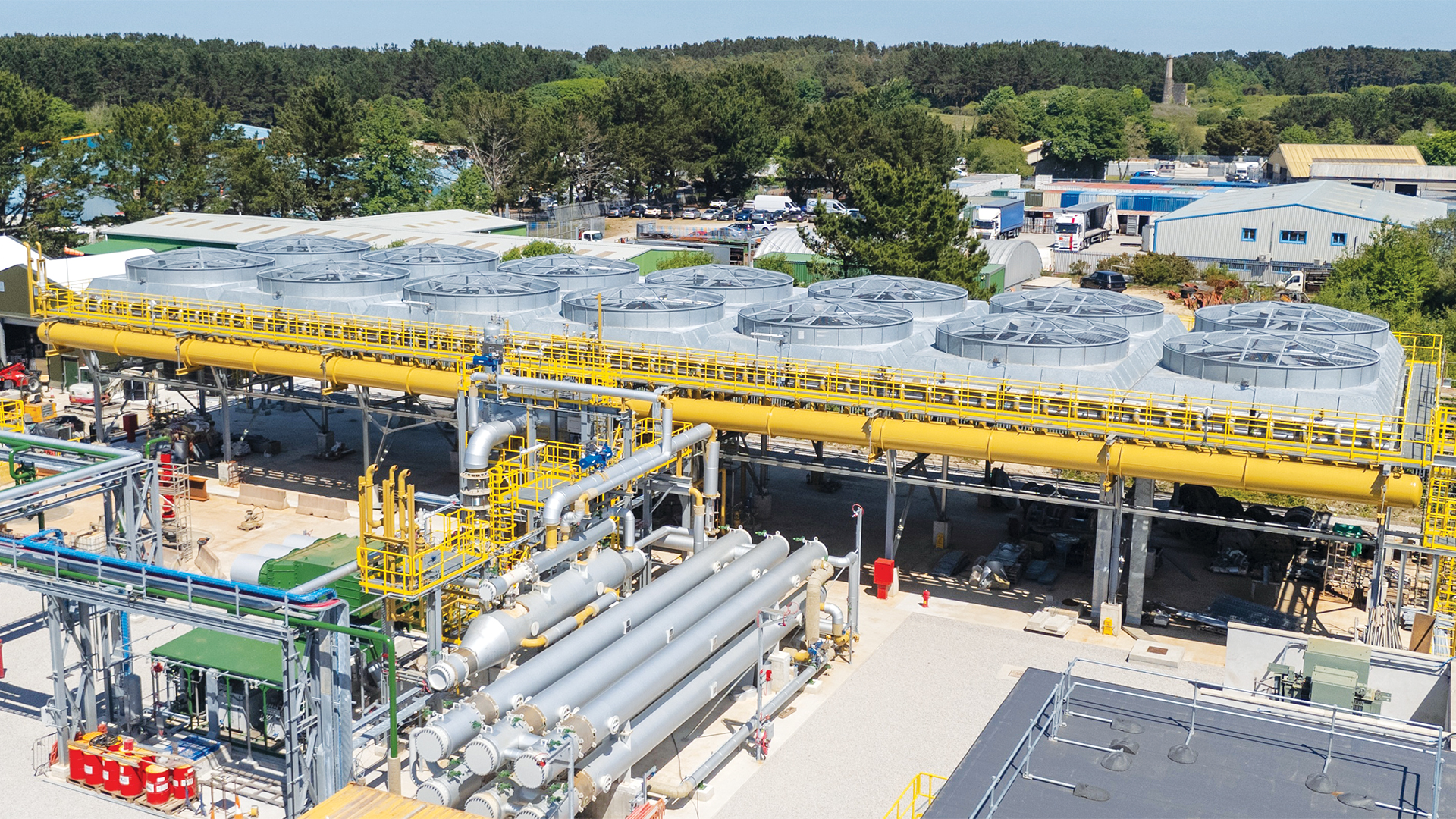
Geothermal Engineering Ltd's geothermal power station, the first of its kind in Britain. Image: Thomas Frost Photography
Share
Today, eucalyptus oil is popular with masseuses. But for Cornish tin miners, its peppery scent was a portent of doom.
“If you have an emergency underground, and you need to tell people to get out, how do you do it?” David Ager, chairman of the King Edward Mine Museum near Redruth, Cornwall, asks me. It’s rhetorical: he’s the expert on this sort of thing.
“You can’t use radios underground. So the way you do it, is you put eucalyptus oil into the inflow of air, which very quickly permeates the mine.”
I lift the bottle to my nose, imagining the scent carried through kilometres of tunnels beneath the ground. “Failure of the pumping equipment and flooding, an explosion, a fire,” Ager says. “That smell means ‘get out’.”
Once the global centre of tin mining, Victorians nicknamed Redruth the “richest square mile in the country”.
Advertising helps fund Big Issue’s mission to end poverty
Advertising helps fund Big Issue’s mission to end poverty
Today, it ranks among England’s most deprived towns, its economy heavily reliant on seasonal tourism. But the mining past is not forgotten – least of all by Ager and his fellow museum volunteers.
On a windy spring afternoon, the retiree is showing Big Issue around. Staff have spent the morning preparing for the seasonal opening: polishing wire pulleys, running the ‘bumping table’, testing clattering wooden machinery, and brushing dust from Edwardian mining uniforms.
All wood and steel, the museum’s contents evoke a vanished world. Except for one display: a bright blue cabinet labelled ‘Cornish Lithium’. Diagrams of chemical structures and glossy photographs of workers in hi-vis interrupt the sepia tones.
In a way, it belongs amid the Victorian antiquities: in 1864, bottles of water drawn from a Cornish tin mine were sent to a chemist at King’s College London, who found they contained up to 10 times more lithium than any spring water previously recorded.
Nobody knew what to do with that information at the time. Now, apparently, they do.
This is ‘the future’ of Cornish mining, according to a nearby panel.
Advertising helps fund Big Issue’s mission to end poverty
This future – and whether it really exists – is why Big Issue is visiting England’s most westerly county.
What’s the fuss about lithium?
Lithium underpins every rechargeable battery: in phones and laptops, and in the vast systems needed to store renewable energy.
It sits at the centre of the green transition – one of the reasons Donald Trump floated annexing Greenland last year. Government projections suggest UK demand could rise by 1,100% by 2035.
China controls roughly a quarter of global production, and more than half of processing capacity. Amid growing geopolitical uncertainty, ministers are scrambling for alternatives. In late March, climate minister Katie White travelled to Chile in search of a more secure supply.
But part of the answer, ministers hope, lies closer to home: beneath Cornwall, which sits on one of Europe’s largest lithium deposits.
In 2021, Boris Johnson dubbed Cornwall the “Klondike of lithium”, invoking the gold rush of the Canadian north. Last year, Keir Starmer described critical minerals as “the backbone of modern life”, pledging support for domestic production.
Advertising helps fund Big Issue’s mission to end poverty
A few miles east of the King Edward Mine Museum, Geothermal Engineering Ltd (GEL) is onboard. They’re one of three companies trying to make this ambition real, along with Cornish Lithium and British Lithium.
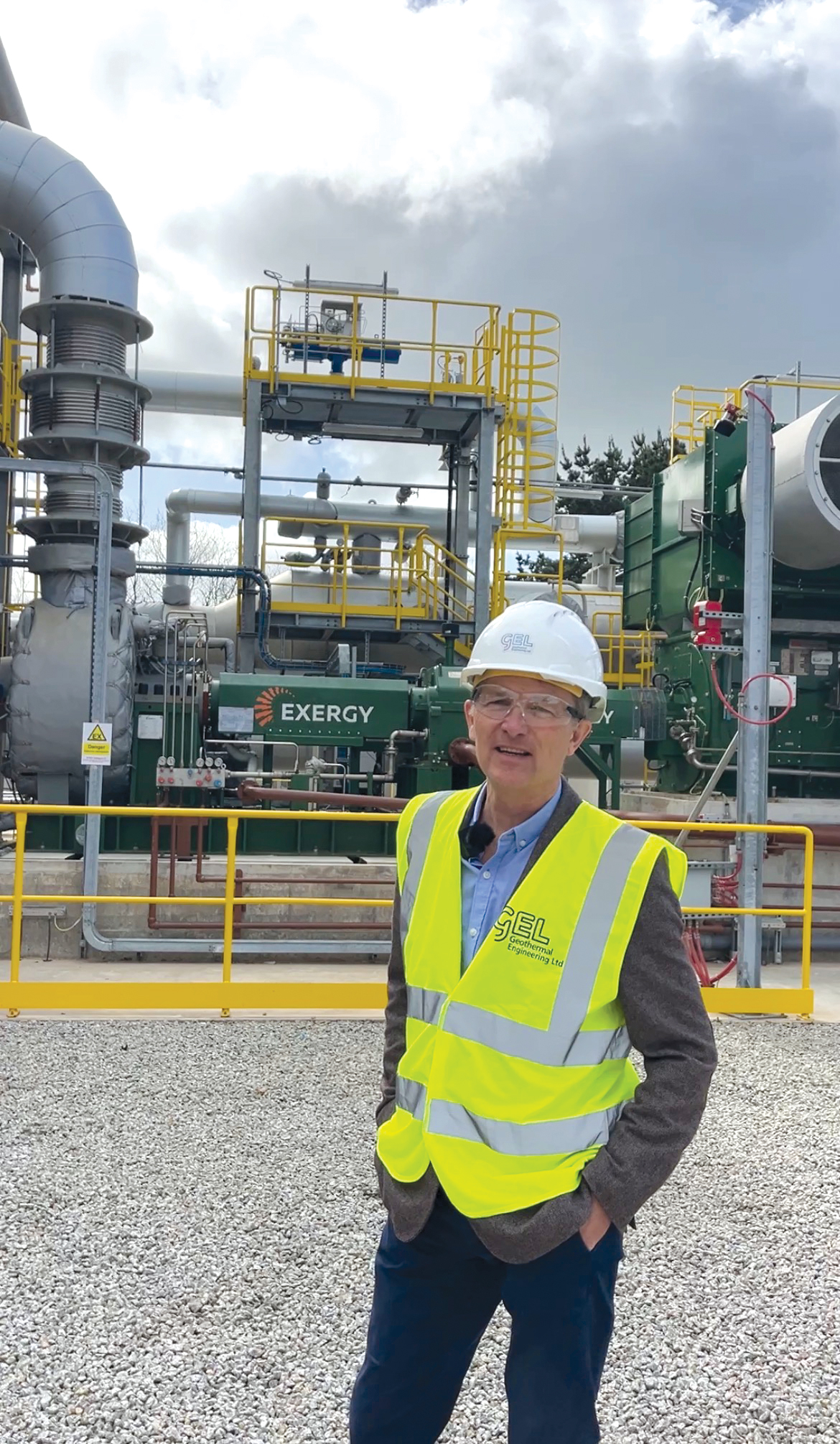
Tony Wilson, GEL CEO
GEL are the first to hit a key milestone: earlier this year, they produced Britain’s first commercial battery-grade lithium.
It “was a bit of an accident”, says Tony Wilson, the firm’s chief operating officer, as we pull on PPE for a tour of the site. “In that it wasn’t the primary purpose.”
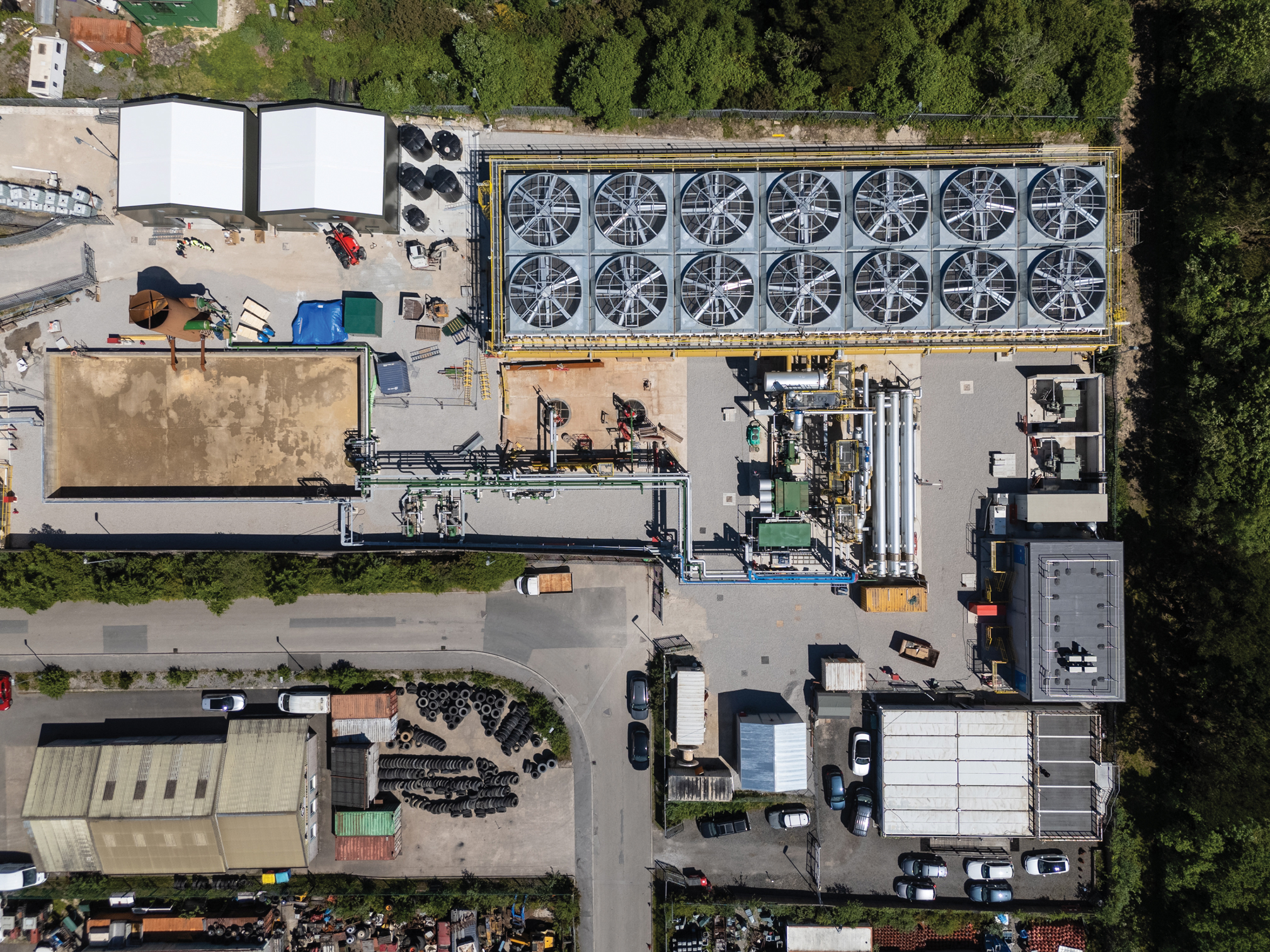
The plant is, first and foremost, a geothermal power station – the first of its kind in Britain. Above ground, it is compact: a cluster of clean-lined metal buildings and pipework, with wellheads and cylindrical units rising from concrete pads.
Most of the operation lies out of sight. Water is pumped five kilometres down into naturally heated granite, where it approaches boiling point before being drawn back up. Driven through a turbine, that heat generates enough electricity to power 10,000 homes.
The lithium is incidental – a byproduct extracted from the water before it is returned underground. The Victorians were right about the presence of the metal: “Our lithium concentrations are actually going up rather than going down, and that’s probably because we’re pulling water from very deep,” Wilson says.
Advertising helps fund Big Issue’s mission to end poverty
Unlike traditional hard rock mining, which involves blasting and processing large volumes of ore, GEL’s approach extracts lithium from geothermal brine already being brought to the surface. The company argues this results in a far smaller environmental footprint.
That does not mean impact-free. Lithium extraction – whether from rock or brine – raises questions around water use and land disruption. In nearby St Austell, Cornish Lithium’s plans to demolish two former China clay pits (known as ‘flatty and pointy’) for a new hard rock lithium mine have been met with opposition by campaigners.
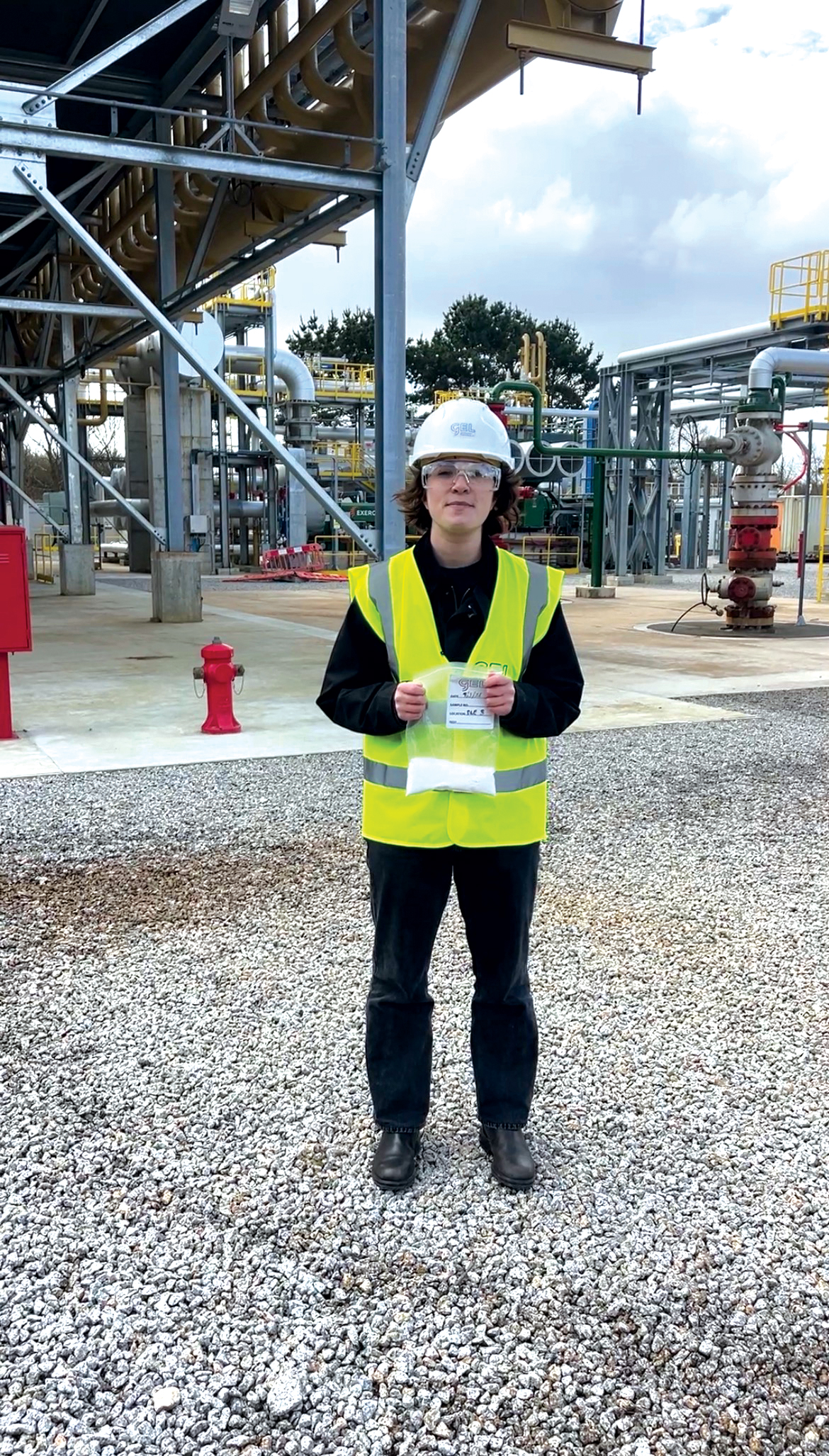
Lottie Elton with her bag of lithium powder
But for policymakers, such concerns are increasingly weighed against the environmental cost of not securing the materials needed for the energy transition – and the possibility of generating local jobs.
In GEL’s extraction lab, Wilson fetches a large Ziploc bag of metallic powder. “Here we are,” he says. It is some of the first lithium produced on British soil.
“At the moment, China is completely in control of the lithium price,” Wilson explains, “so they can either flood the market with lithium or hold back to manipulate the price. And that’s not something that we want to be beholden to.”
Cornwall, he argues, offers a foothold: small in scale for now but domestically controlled.
Advertising helps fund Big Issue’s mission to end poverty
“The projection in the government’s critical mineral strategy is that we need about 50,000 tons of lithium carbonate by 2030,” he adds. “We are confident that we can produce a fifth of that. So that’s 10,000 tons.”
“Cornish Lithium can also produce in the same sort of volume, about another 10,000 tons… So between the two companies, we can meet two-fifths of the UK’s demand.”
Within a decade, GEL says it could be producing enough lithium carbonate to supply around 250,000 electric vehicles a year.
A competitor – or “friendly rival”, as Wilson puts it – Cornish Lithium has been producing battery-grade samples through hard rock mining since late 2025 and is aiming for a full commercial plant by 2029.
There is a further complication. Even if Cornwall produces raw lithium, that’s only step one – the metal still needs to be refined and processed into cathode active material, the stuff that actually goes into a battery cell. China controls around 60% of global processing capacity, meaning lithium dug out of Cornish ground could still end up shipped to China for processing before returning as battery components.
The one domestic answer is Green Lithium’s planned Teesside refinery – set to be built by 2029, the same year Cornish Lithium hopes to reach commercial production.
Advertising helps fund Big Issue’s mission to end poverty
“The sooner that we can get secure domestically produced lithium, the better,” Wilson says.
Aerial shot of the GEL plant in Redruth. Image: Thomas Frost Photography
What about jobs?
Much of the media buzz around the new projects has centred on employment.
Around Redruth and Camborne, the mining past is never far away. Old steam engine towers – once used to power the lifting of ore and the pumping of water from deep shafts – still punctuate the landscape. Many stand half-ruined, some blasted apart by American GIs training for the D-day landings. As Ager explains: “The logic went, I suppose, that if you can blow up a tower you can blow up a bridge in Northern France.”
Local pubs boast names like The Shaft Inn, The Miner’s Arms, the Copper Coast. But it’s an echo of a disappeared industry, Ager says.
“A lot of people live on very low incomes, and a lot of the work is transitory. It’s summer tourism, which is just for the summer, or it’s daffodil picking or something like that,” he adds. “It’s not good. A lot of this work, not only is it short term, but it’s also fairly low paid.”
His wife runs a foodbank, and it is always busy. Younger people, among them his own children, often leave in search of stable work, leading to a ‘brain drain effect which exacerbates the area’s economic problems.
Advertising helps fund Big Issue’s mission to end poverty
“The return of mining will work against that, because mining is well-paid, well-qualified work. Now this gives young people an opportunity to make a living here.”
Image: The J. Paul Getty Museum
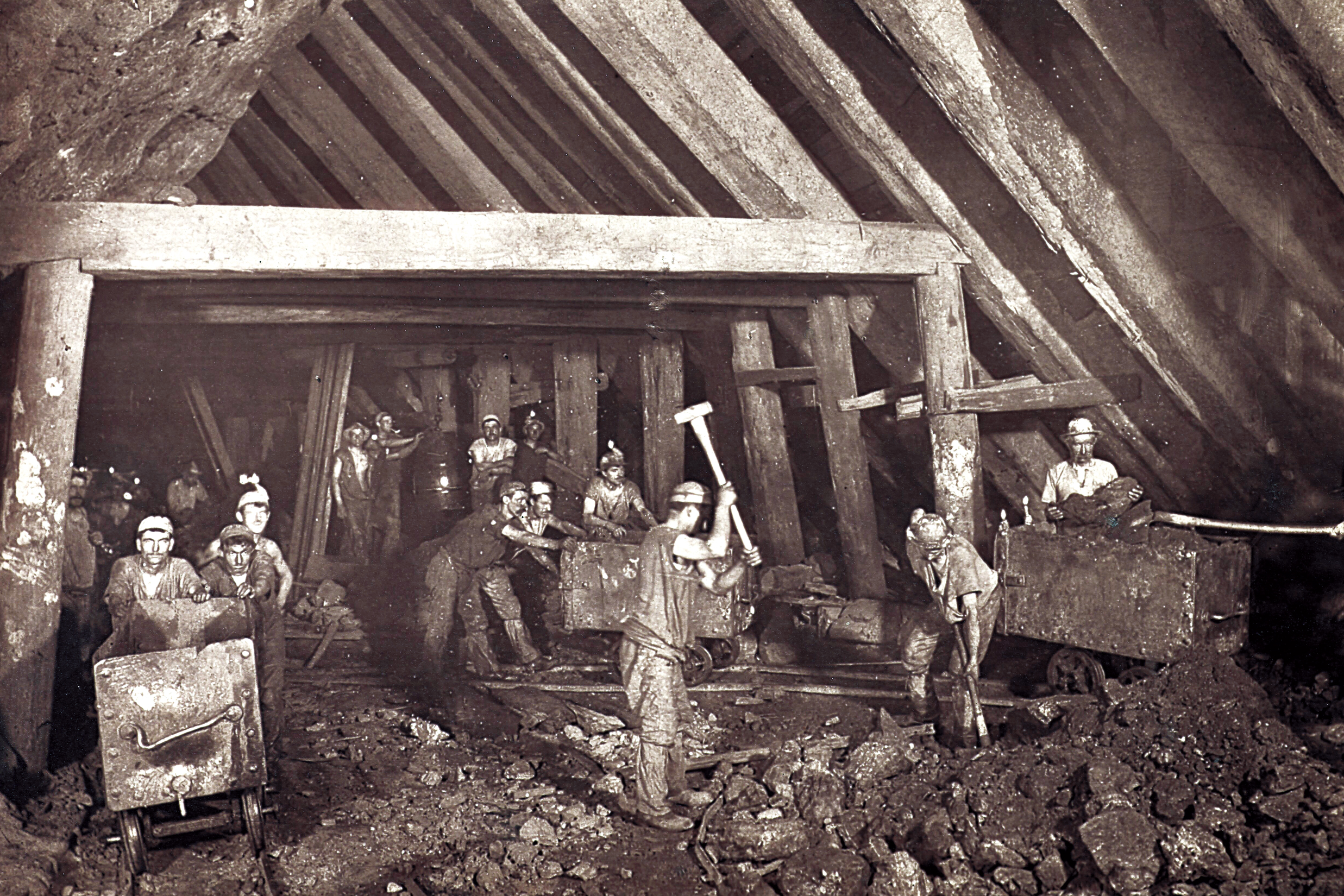
In its heyday, mining employed on a vast scale, despite the risks. In 1861, 30% of men aged 15 to 69 were recorded as working in or around the mines. Of the more than 29,000 counted, over a quarter lived in just four parishes around Camborne and Redruth.
The collapse came quickly. Cheaper foreign tin and copper flooded the market, and the industry slipped from boom into long decline. Tens of thousands of Cornish miners emigrated in the late 19th century, hence the old phrase: “at the bottom of every hole in the world, you will find a Cornishman”.
On 6 March 1998, the pumps at South Crofty – the UK’s last tin mine – were finally switched off. Ager was there, singing with his choir.
“We stood by the main shaft, singing Cornish songs. Unfortunately, we were all in choir uniforms, and it rained. So we were pretty cold,” he recalls.
“But it was quite an emotional occasion. The last shifts came up, men got out of the cage, and that was the end.”
Advertising helps fund Big Issue’s mission to end poverty
In the years since, Cornwall’s economy has come to depend heavily on tourism, much of it seasonal and part-time. A return to mining, optimists argue, could begin to shift that balance.
Labour MP Perran Moon has suggested the sector could create “thousands of jobs in mining and the supply chain”, with companies offering similar projections.
“If we look at our next three plants… including construction and development, we’re looking at about 500 jobs,” Wilson adds. “This could be a revival of the mining that used to exist.”
Cornish Lithium also projects 300 direct jobs over the 20-year lifespan of its Trelavour project, plus 800 during construction. The South Crofty tin mine where Ager sang is being re-opened too, to meet growing green transition demand for critical minerals.
But not everyone is convinced. On the way to the GEL facility, I ask my taxi driver – a Cornwall resident of 22 years, and “almost a local” in his own words – what he thinks. “You hear a lot about jobs, sure, that’d be good,” he says. “But more than tourism? No. It’ll just be a few jobs, I think.”
Modern mining employs far fewer workers than its 19th century predecessor. And the jobs that do exist aren’t always secure.
Advertising helps fund Big Issue’s mission to end poverty
The most ambitious Cornish metals project on paper was Imerys British Lithium – a joint venture between a British startup and French mining giant Imerys, sitting on one of the UK’s largest confirmed deposits near St Austell. But in 2023-24, global lithium prices crashed by more than 80% from their 2022 peak, driven by oversupply and slower-than-expected EV adoption. Projects that once looked profitable suddenly seemed unviable.
In February 2026, Imerys pulled its funding and mothballed the project. The site is still in limbo. According to local reporting, between 40 and 70 British Lithium employees were made redundant. The promised 300 new jobs will likely not materialise.
Big Issue approached British Lithium for comment.
The story mirrors, on a much smaller scale, some of the unemployment that played out when the last mining boom died in Cornwall.
I put this to Wilson. The industry is still vulnerable to global price fluctuation, he says. exacerbated by China’s dominant market share – but even if the employment numbers fall well short of mining’s 19th century peak, a full-time job retained in Cornwall is something to be celebrated.
“There are a whole raft of different job opportunities for people to work with us, ranging from things like laboratory assistants to project managers, geologists, specialists, chemists, engineers, mechanical and electrical operators,” Wilson adds.
Advertising helps fund Big Issue’s mission to end poverty
“And certainly, we’ve already had one or two people who would not be in Cornwall were it not for the fact that they’re working with us.”
There are early signs of that shift taking hold. The Camborne School of Mines recently relaunched its mining engineering degree at the University of Exeter, training a new generation for an industry that – until recently – belonged to the past.
In the centre of Redruth, a statue of a tin miner stands on a plinth, a string of candles draped around his neck. In one hand, he holds a short-handled pick; in the other, an ingot of tin. For more than a century, people like this defined Cornwall.
With job numbers relatively modest and fluctuating, it’s not certain that a future statue will clutch a battery and a Ziploc bag of powdery metal. But lithium offers the promise of a mining renaissance, albeit one on very different terms. Many remain hopeful – including Ager. “What I would say to young people is – there’s a future for you in Cornwall,” he says. “If you want it.”
Advertising helps fund Big Issue’s mission to end poverty
Buy from your local Big Issue vendor every week – and always take the magazine. It’s how vendors earn with dignity and move forward.
You can also support online: Subscribe to the magazine or support our work with a monthly gift. Your support helps vendors earn, learn and thrive while strengthening our frontline services.
Thank you for standing with Big Issue vendors.
Advertising helps fund Big Issue’s mission to end poverty