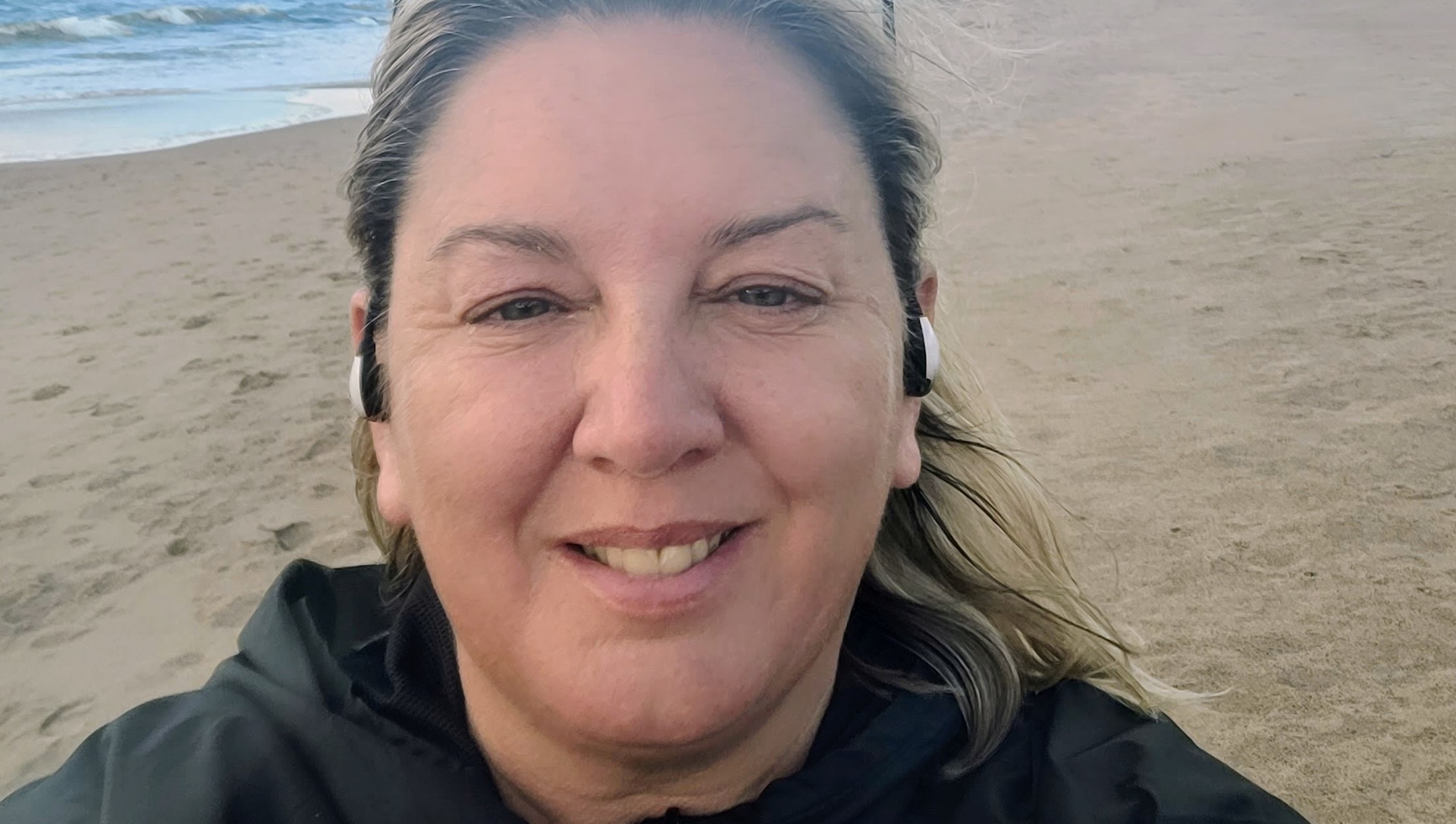
“The project I was working on at the time was with quite high-risk clients and I had to make the decision to step back from that work because it’s mentally exhausting even on your best days,” Isobel, who is based in Northern Ireland, says. “I felt like I was doing a disservice to the patients.”
It wasn’t an easy decision – Isobel had been in the job for nearly 15 years and loved it. She also worried about how it would impact her financially. She was working part-time for an agency and was then self-employed, so she was “taking quite a lot of financial hits”.
“You’re always worried about your mortgage and bills to pay,” Isobel says. “You know what’s happening but nobody’s listening. You’re being sent for tests and you’re just trying to push through just to have enough money to get your bills paid. Financially, it was really tough.”
On average, women are missing out on 5.5 working days a year due to menopause-related illness alone.
Just under half (47%) of women have had to change the way they work to cope with menopause. This includes reducing their hours (18%), cutting responsibilities (12%) or turning down promotions or training opportunities (6%).
Dr Cheryl Lythgoe, nurse consultant at Benenden Health, says: “Menopause affects women differently and can bring a wide range of physical, mental and emotional symptoms that are hard to manage while working. Yet many still feel uncomfortable discussing it in the workplace, meaning essential support is often missed.”
Advertising helps fund Big Issue’s mission to end poverty
The most common reasons for disruption at work are brain fog and memory issues, hot flushes and fatigue.
“I felt extremely isolated,” says Isobel. “And I started to isolate myself a lot more alongside that. I thought maybe I was just being completely neurotic, which I definitely wasn’t. I know that now, being on the end of things.”
Isobel had “intrusive” medical testing and she felt that “some GPs just didn’t understand”.
“I went through things I would never want to see another woman go through,” she says.
She found a menopause consultant through Benenden Health and was given recommendations which she could take to her GP, who then put her on hormone replacement therapy (HRT).
“It was the weirdest feeling,” she recalls. “I felt like somebody had lifted a curtain. I hadn’t realised how bad the brain fog was until I started the HRT. It did take about three months to regulate, and I am still playing about with it at the minute, but it was like night and day. I felt like I got back in touch with a part of me I hadn’t seen in a long time.”
Advertising helps fund Big Issue’s mission to end poverty
With more energy, Isobel was able to get back to a consistent work schedule.
Dr Amy Pressland, head of talent and performance at Benenden Health, says: “Menopause should never be a reason for someone to step back from work they love, or for an organisation to lose talent.
“Instead, we would encourage employers to have open conversations, implement a range of practical support options and tailored workplace policies, so they can create environments where women can thrive at every stage of life.”
The Employment Rights Act, which became law in December 2025, has begun to address the barriers. By 2027, UK employers with more than 250 staff members will have to create Menopause Action Plans.
These will take into account flexible working arrangements, rest breaks, temperature of the workplace, training around menopause and recording of menopause-related work absence.
From April 2026, employers will be able to introduce Menopause Action Plans on a voluntary basis. The aim is to create working environments where menopause symptoms do not hinder a woman’s ability to continue work or progress in her career.
Advertising helps fund Big Issue’s mission to end poverty
But it will be up to employers to ensure that action plans are implemented effectively and that women receive the support they need.
Isobel believes that until there is greater understanding, menopause will continue to be another way that women can be discriminated against in the workplace.
“People need to understand that it’s not something you have control over,” she says. “Nobody chooses the suffering.”
Do you have a story to tell or opinions to share about this? Get in touch and tell us more.
Change a vendor’s life this winter.
Buy from your local Big Issue vendor every week – and always take the magazine. It’s how vendors earn with dignity and how we fund our work to end poverty.
Advertising helps fund Big Issue’s mission to end poverty
You can also support online with a vendor support kit or a magazine subscription. Thank you for standing with Big Issue vendors.